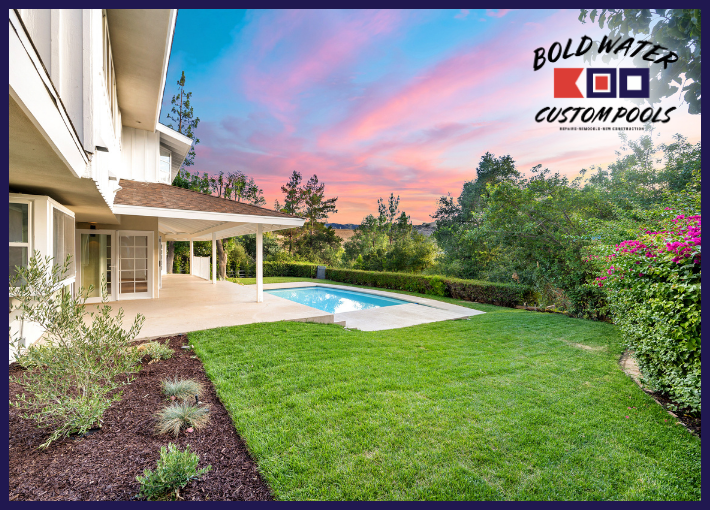
Most people picture a pool project starting with an excavator ripping into the backyard. By the time that machine shows up, the project is actually half done — you just can’t see that half. It lives in drawings, engineering calculations, permit files, and a hundred small decisions made around a kitchen table.
Here’s everything that happens before the first shovel of dirt moves — the part of the process that decides whether your build goes smoothly or becomes the story your neighbor loves to tell.
Step 1: The Site Visit — Where Reality Meets the Wish List
Every project starts with us standing in your backyard. Not looking at satellite photos. Standing there. We’re checking access for equipment, slope and drainage, soil conditions, where your utility lines run, setback requirements from property lines, and how the sun tracks across the yard.
This visit kills more bad ideas — and rescues more good ones — than any other step. Maybe the spot you’ve imagined for years sits over a utility easement. Maybe the yard slopes in a way that opens the door to a stunning infinity edge you hadn’t considered. Either way, we’d rather find out now than after design work starts.
Come with your honest budget range and wish list — we can’t design intelligently around numbers we don’t have.
Step 2: Design — Turning Ideas Into Something You Can Walk Through
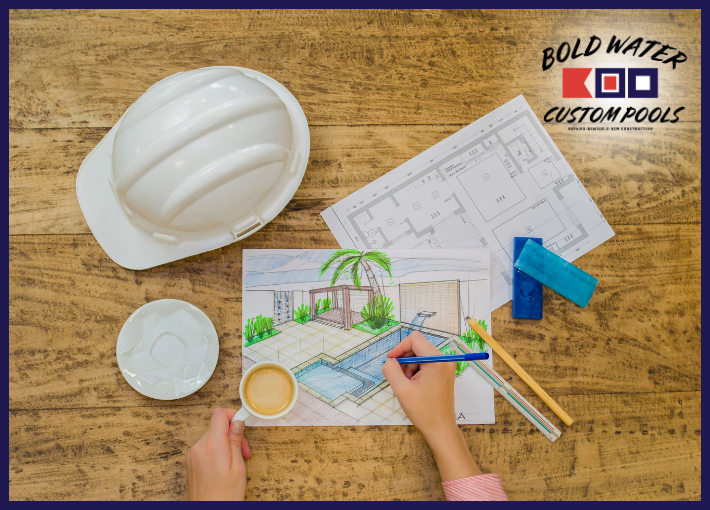
Next, the design phase. This is where your pool goes from “something freeform, maybe with a spa?” to a detailed 3D rendering you can virtually walk around. Shape, depth profile, tanning ledge, spa placement, water features, lighting, decking materials, landscaping tie-ins — all of it gets decided here.
Expect a few rounds of revisions, and don’t feel bad about asking for them. Changing the location of a spa in a rendering costs nothing. Changing it after the shell is shot in concrete costs real money and real weeks. The design phase is exactly the right time to be picky, so be picky.
This is also where the budget gets honest: a detailed design lets us price the actual project as a real number tied to real selections.
Step 3: Engineering — The Part Nobody Sees and Everybody Needs
Once the design is locked, structural engineering takes over. An engineer calculates the steel schedule, shell thickness, and soil bearing requirements for your specific site. If your yard has expansive soil, a high water table, or a slope, the engineering accounts for it.
It’s invisible work, and it’s the reason a properly built pool lasts decades. When pools crack or shift a few years after construction, the story almost always traces back to corners cut at this stage. We don’t cut them, and you shouldn’t let anyone else either.
Step 4: Permits and Approvals — The Waiting Game With a Purpose
Now the paperwork. Pool construction requires permits, and depending on where you live, that can mean building permits, electrical permits, plumbing permits, fence and safety-barrier compliance, and sometimes HOA architectural review on top of everything else.
This stage tests everyone’s patience — some municipalities turn permits around in days, others take many weeks. Here’s what we can control: submitting a complete, clean package the first time. A huge share of permit delays come from sloppy or incomplete submissions bouncing back for corrections. Ours don’t bounce.
If you have an HOA, tell us on day one. Their review usually runs parallel to the municipal process, but only if it starts early.
Step 5: Selections — Locking In the Details
While permits are in review, we finalize selections: interior finish, waterline tile, coping, decking, equipment package, automation, heating, lighting. We schedule these decisions deliberately during the permit window so the waiting time does double duty.
One piece of hard-won advice: make every selection before construction starts. Projects that stall mid-build are almost always waiting on a decision or a material that should have been locked months earlier. When you choose everything up front, we can confirm availability and sequence the whole build around materials we know are coming.
Step 6: The Pre-Construction Meeting — Everyone on the Same Page
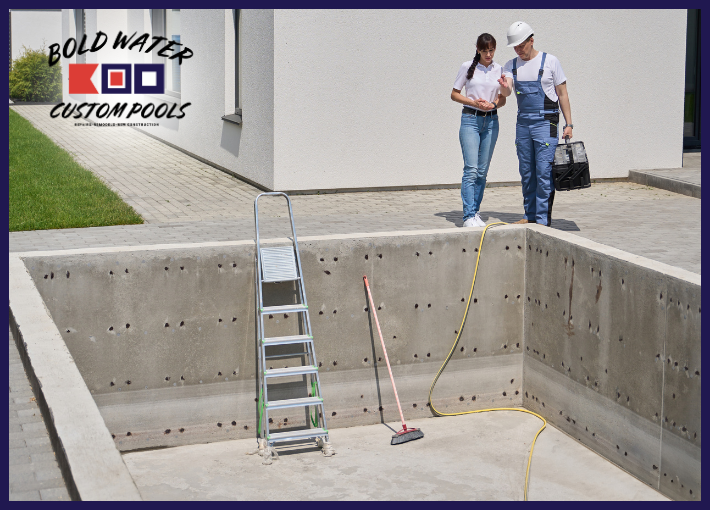
With permits in hand and selections locked, we hold a pre-construction meeting. We walk the site together and mark the pool footprint with paint so you see the exact size and placement in your actual yard — this is the moment it gets real for most families. We confirm access routes for equipment, protect what needs protecting, review the construction schedule phase by phase, and make sure you know who your point of contact is and how updates will reach you.
We also talk honestly about living through construction — the noise, the mess, and which parts of the yard stay usable. Clients who know what’s coming are relaxed clients.
Then, Finally, We Dig
After all of that — typically a couple of months, sometimes more depending on permitting — the excavator arrives. From this point on, the project moves fast. Dig, steel, plumbing, shell, tile and coping, decking, equipment, interior finish, fill. The visible construction is the sprint. Everything above was the training.
Frequently Asked Questions
How long does it take before pool construction actually starts?
From signing a contract to breaking ground, plan on roughly six to twelve weeks in most cases. Design revisions, engineering, and — above all — local permit timelines drive the range. A complete, accurate permit submission is the single best way to keep it on the short end.
Why do pool permits take so long?
Because multiple departments often review the same application — building, electrical, sometimes zoning and health — and each works on its own timeline. Add an HOA review and the queue gets longer. Builders can’t speed up the government, but they can avoid the rejections and resubmissions that cause most delays.
What should I decide before meeting a pool builder?
Three things: your realistic total budget, how you’ll actually use the pool (kids cannonballing, quiet laps, entertaining), and any must-have features. You don’t need to know shapes or finishes — that’s what design is for — but those three answers shape every recommendation.
Can I change my pool design after construction starts?
Sometimes, but changes get more expensive and disruptive with every phase that’s completed. Moving a wall in a rendering is free; moving it after concrete is shot means demolition, re-engineering, and often a permit revision. Make changes on paper, not in the ground.
Thinking About a Pool of Your Own?
The best projects start with an unhurried conversation and a walk around your yard. That costs you nothing but an hour, and it will tell you more than a month of internet research.
**Reach out to Bold Water Custom Pools to schedule your design consultation.**